
Lattice LFE5UM-85F-8BG381C: A Comprehensive Overview of its Architecture and Applications
The Lattice LFE5UM-85F-8BG381C is a prominent member of the Lattice ECP5™ FPGA family, renowned for its high performance-per-watt and cost-effectiveness in a small form factor. This specific device, packaged in a 381-ball caBGA, represents a powerful solution for a wide array of applications, from communication infrastructure to industrial automation. Its architecture is a testament to the evolution of FPGA design, balancing logic density, power efficiency, and high-speed connectivity.
Architectural Prowess
At the core of the LFE5UM-85F lies a sophisticated and efficient architecture built to handle complex logic tasks. The programmable fabric is based on a look-up table (LUT) architecture, which provides the fundamental logic blocks for implementing custom digital circuits. With 84,000 LUTs, this device offers substantial logic capacity for designing intricate systems on a single chip.
A critical component of its architecture is the embedded block RAM (EBR). These dedicated memory blocks are strategically distributed across the chip, enabling efficient data storage and buffering without consuming valuable logic resources. This is crucial for applications like data processing and packet buffering. Furthermore, the device incorporates DSP blocks optimized for high-performance arithmetic operations, including multiplication, addition, and accumulation. These blocks are indispensable for accelerating mathematical algorithms in signal processing.
For high-speed serial communication, the LFE5UM is equipped with multiple high-speed SerDes (Serializer/Deserializer) transceivers. These transceivers support major protocols like PCI Express, Gigabit Ethernet, and JESD204B, allowing the FPGA to act as a bridge between different data interfaces and manage high-bandwidth data streams seamlessly. The device also features a flexible I/O structure supporting various voltage standards, making it adaptable to interface with a multitude of other components on a board.
Diverse Application Landscape
The combination of its feature set makes the LFE5UM-85F-8BG381C exceptionally versatile.
Communications and Networking: It is extensively used in software-defined networking (SDN) and network function virtualization (NFV) applications. Its SerDes capabilities make it ideal for implementing interface bridges, packet processing, and traffic management in switches, routers, and base stations.
Industrial and Automotive Systems: In harsh environments, reliability is key. This FPGA is used for motor control, sensor fusion, and real-time control systems in industrial automation. Its low power consumption and robustness are also assets in automotive systems for driver assistance and in-vehicle networking.
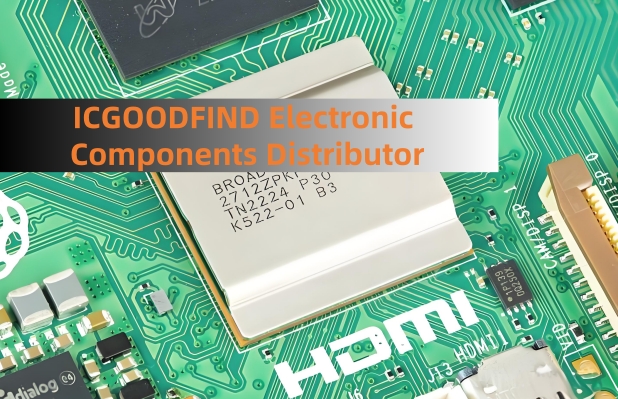
Consumer Electronics and Video: The device's ability to process multiple data streams in parallel makes it suitable for video bridging, aggregation, and conversion. It can be found in systems that require interfacing between different video standards (HDMI, DisplayPort) or implementing image processing pipelines.
Aerospace and Defense: For applications requiring radiation tolerance and high reliability, certain grades of the ECP5 family are utilized. Their small size and low power are critical for space-constrained and power-sensitive payloads.
Embedded Vision and AI: While not a dedicated AI accelerator, the FPGA's parallel architecture is effective for pre-processing sensor data, implementing custom neural network layers, and performing low-latency inference at the edge, often in conjunction with a microprocessor.
The Lattice LFE5UM-85F-8BG381C stands out as a highly integrated and power-efficient FPGA. Its balanced architecture, combining substantial logic density, dedicated memory, DSP blocks, and high-speed serial transceivers, provides an ideal platform for innovators across industries. It successfully bridges the gap between low-capacity FPGAs and high-power, high-cost alternatives, making advanced programmable logic accessible for volume-sensitive and power-conscious designs.
Keywords:
FPGA
ECP5
SerDes
Low Power
Embedded Vision

