
A Comprehensive Overview of the Infineon TDA5100B2 ASK Superheterodyne Receiver
In the realm of wireless communication, particularly for applications requiring robust and reliable data links, the Infineon TDA5100B2 stands out as a highly integrated ASK superheterodyne receiver. This device is engineered to deliver exceptional performance in the 315 MHz, 434 MHz, and 868 MHz frequency bands, making it a versatile solution for a wide array of remote control and data transmission systems, including garage door openers, remote keyless entry (RKE), home automation, and industrial telemetry.
The core of its design is the superheterodyne architecture, a time-tested and superior approach for receiving radio frequency (RF) signals. Unlike simpler direct-conversion (homodyne) receivers, the superheterodyne design offers enhanced selectivity and sensitivity. The TDA5100B2 achieves this by down-converting the incoming high-frequency RF signal to a lower, fixed Intermediate Frequency (IF). This two-stage conversion process significantly improves the receiver's ability to reject unwanted adjacent channel interferers and image frequencies, resulting in a much more stable and noise-immune performance.
Key features that define the TDA5100B2's capabilities include:
High Integration: The IC incorporates a low-noise amplifier (LNA), a fully on-chip Phase-Locked Loop (PLL) synthesizer and Voltage-Controlled Oscillator (VCO), an IF amplifier, and a sophisticated demodulator. This high level of integration minimizes external component count, simplifies PCB design, and reduces the overall bill of materials and assembly costs.
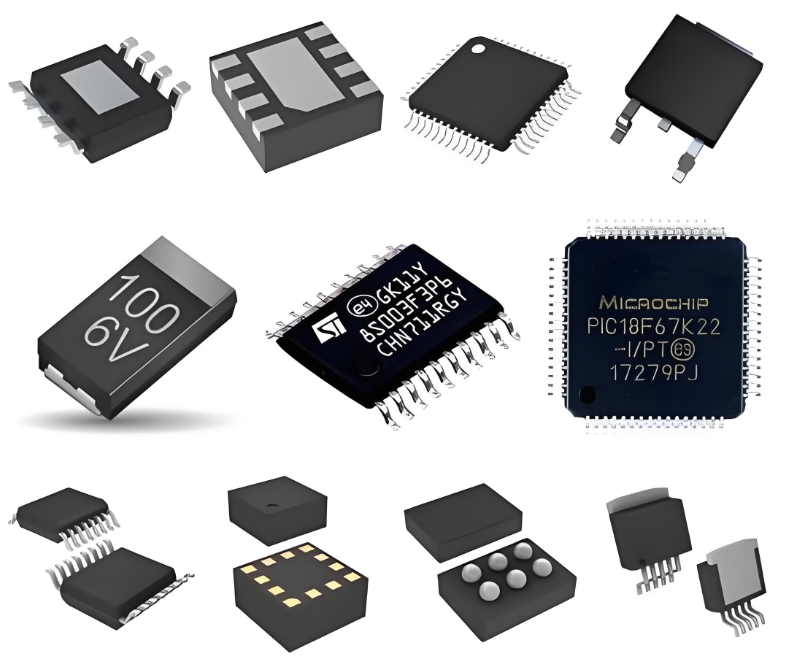
Exceptional Sensitivity: With a typical sensitivity of -109 dBm, the receiver can detect extremely weak signals, thereby extending the operational range of the wireless system.
Low Power Consumption: Designed with efficiency in mind, it features a power-down mode that drastically reduces current consumption when the receiver is idle. This makes it exceptionally suitable for battery-powered portable devices.
RSSI Output: The Received Signal Strength Indicator (RSSI) provides a DC voltage proportional to the strength of the received signal. This analog output is invaluable for system diagnostics, range testing, and implementing functions like adaptive power control.
Data Filtering: An integrated data filter helps to shape the demodulated output signal, improving the integrity of the retrieved data and reducing the bit error rate (BER).
The operational principle involves the incoming ASK-modulated RF signal being amplified by the LNA before being mixed down to the IF by the PLL-driven mixer. The IF signal is then amplified and filtered before being fed into the demodulator, which extracts the original digital data stream. The device requires only a few external components, such as a reference crystal for the PLL, a handful of capacitors, and a coil for the resonant circuit, to form a complete receiver solution.
ICGOOODFIND: The Infineon TDA5100B2 is a premier choice for designers seeking a high-performance, reliable, and cost-effective ASK receiver solution. Its superheterodyne architecture delivers superior interference rejection and sensitivity compared to simpler alternatives, while its high level of integration accelerates time-to-market and ensures design robustness for mass-produced applications.
Keywords: ASK Superheterodyne Receiver, Infineon TDA5100B2, RF Sensitivity, PLL Synthesizer, Low Power Consumption.

