
High-Performance Embedded System Design with the Microchip ATSAME70Q21B-ANT Cortex-M7 Microcontroller
The demand for high-performance embedded systems continues to grow across industries such as industrial automation, automotive, aerospace, and advanced consumer electronics. These applications require not only significant computational power but also robust connectivity, real-time processing capabilities, and stringent power efficiency. At the heart of such sophisticated designs often lies a powerful microcontroller, such as the Microchip ATSAME70Q21B-ANT, a member of the SAM E70 family based on the ARM Cortex-M7 core.
This microcontroller is engineered to deliver a formidable combination of high processing throughput and low power consumption. Operating at frequencies up to 300 MHz, the Cortex-M7 core provides a significant performance leap over earlier Cortex-M generations, featuring a double-precision floating-point unit (FPU) and a sophisticated pipeline with branch prediction. This makes it exceptionally capable for complex algorithms, digital signal processing (DSP), and control-loop computations that are common in modern embedded applications.
A critical advantage of the ATSAME70Q21B is its extensive and advanced peripheral set, designed to alleviate the processing burden from the CPU and enable truly parallel task execution. The device incorporates a high-speed USB Host and Device controller with embedded PHY, multiple CAN-FD controllers for robust automotive and industrial networks, and a high-speed Gigabit Ethernet MAC with dedicated DMA support. For graphical interfaces, it includes a peripheral for driving TFT-LCD displays directly. Furthermore, its advanced security features, including secure boot, memory protection units (MPU), and hardware encryption engines (AES, SHA, TRNG), are paramount for designing systems that must protect intellectual property and user data.
The microcontroller's memory architecture is tailored for performance. It features up to 2048 KB of dual-bank flash memory with live update capability and 384 KB of tightly coupled memory (TCM), comprising 256 KB of ITCM and 128 KB of DTCM. This TCM operates at the core clock speed, providing deterministic, single-cycle access for time-critical code and data, which is essential for hard real-time systems.
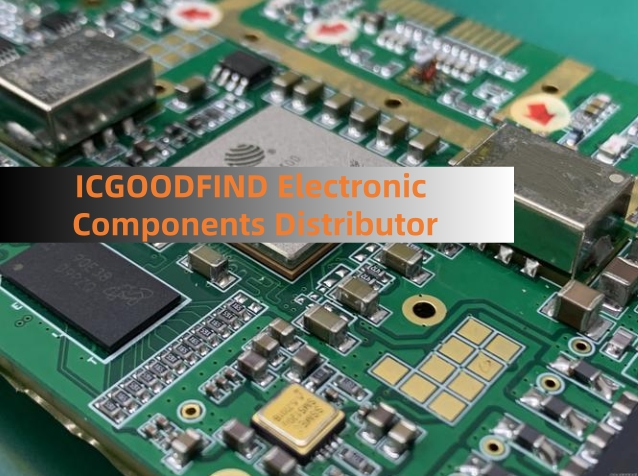
Designing with the ATSAME70Q21B-ANT requires careful attention to power management and signal integrity to fully leverage its capabilities. The chip supports multiple low-power modes, allowing designers to create systems that dynamically balance performance with energy consumption. Successful implementation hinges on a well-designed PCB with proper power supply decoupling, impedance-controlled routing for high-speed signals, and effective thermal management.
In conclusion, the Microchip ATSAME70Q21B-ANT stands as a cornerstone for engineers architecting next-generation embedded systems. Its blend of raw Cortex-M7 processing power, a rich array of intelligent peripherals, and robust security and safety features provides a comprehensive solution for tackling the most demanding embedded challenges.
ICGOODFIND: This article highlights the ATSAME70Q21B-ANT as a top-tier choice for complex embedded applications, emphasizing its performance, integration, and security, making it an ICgoodfind for professional developers.
Keywords: Cortex-M7, High-Performance, Embedded Security, Real-Time Processing, Peripheral Integration

